
Book Diary
Lázár, Flesh, Marvel Universe, and some older books

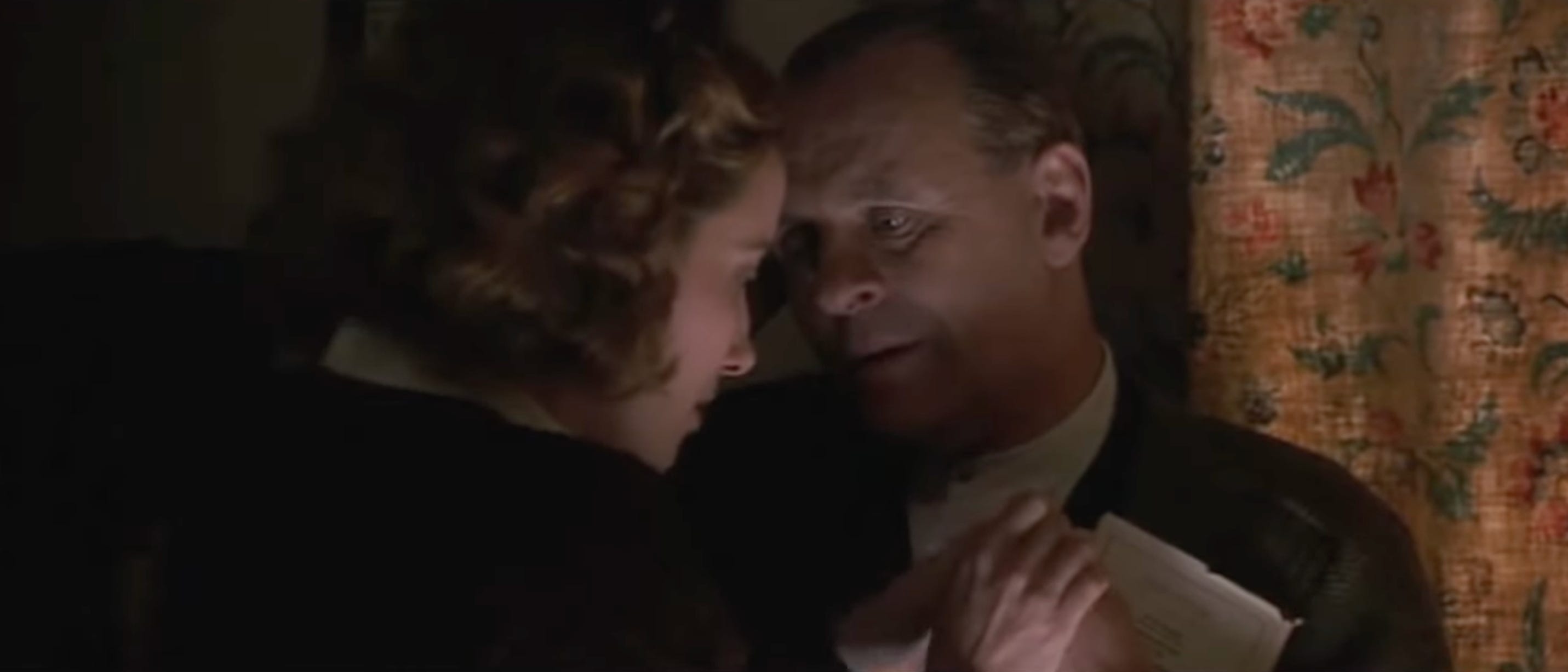
I’d been meaning to read The Remains of the Day for years and finally read it on one leg of a long trip this winter. We were flying Business, an extreme rarity for me. OK, it was my first time. Singapore Airlines, no less. It was unbelievably luxurious. The seats were like little cabins unto themselves. Everything was smooth and rounded. The other passengers looked happy and calm, but this was only a fleeting impression because we hardly had to see each other at all. The flight attendant addressed me by name and made sure she was pronouncing it correctly. Usually the flyers you pass on the way through Business Class are disappointing: I scan their clothes and faces for signs of distinction but find none, they look just like the slobs in Coach. But in our cabin this time, stowing his luggage in the overhead compartment two rows up, was a Buddhist monk. Not an American Buddhist monk, pale and shaven-headed and ascetic, but an Asian one, well-fed and successful-looking, in beautiful deep-red robes. Flattered by his presence and by the blessed atmosphere of privilege, I tried to act dignified and pleased with myself and like I belonged. But my copy of Remains, an old mass-market movie tie-in paperback, looked out of place and seemed to give me away as a one-time splurger from Economy. What book should I have brought, I wondered, what book would have fit in? A pretty Fitzcarraldo edition of some contemporary novel? No, of course not. Too pretentious. Maybe a Loeb edition of Tacitus or somebody? Even worse. No, the answer to the question “What book goes with Business Class?” is: none. Pretty much all books are middle-class. The only passable books would have been the ones that showed the least amount of interest in literature or reading, the least book-like books, a hardcover of a presidential autobiography, maybe, or Robert Ludlum or something else you can buy at the airport, and the fancy thing to do with it on the flight would be to put it on the tray table and not read it1.
Paul Fussell, in his brilliant, eccentric, incredibly rude book Class: A Guide to the American Status System, writes that the American upper class resembles the upper classes of other countries and other eras in its “total imperviousness to ideas.” This is poignantly true of the upper-class character in Remains of the Day, a great lord and diplomat – sort of an amateur diplomat, just what everybody needs – who, in the period after World War I, attempts to promote unity among nations but only becomes a dupe of the Nazis, since in place of ideas he has only his gentlemanly notions of honor and fair play and is also slightly stupid. This is only revealed slowly and isn’t really the main plot. The book is about and narrated by his butler (I think his name is Stevens in the book but of course you picture Anthony Hopkins), a virtuoso of butlering and a virtuoso of repression. I’ve heard Ishiguro wrote it in something like six weeks, and you can believe that when you read it, you imagine him hurrying to get it all down, it reads as though the whole story wanted to pour out as soon as he found the voice of the main character. I’d forgotten Ishiguro’s peculiar style. There’s a certain weirdness, an unsocialized, homemade quality to his books, at least to the three that I’ve read. They’re very skillful, the prose is perfectly controlled, but they have some kind of faint unplaceable awkwardness to them, the quality, just a little, of being written by someone raised in an attic. I think that’s what makes them special.
Stevens’ character, for example, is both believable and a little unreal. He’s not priggish and cold but, in his repressed and old-fashioned way, charming, sympathetic, touching, and even funny. He’s a wonderfully living and convincing character, even though his repression is almost too perfect, cartoonish. He’s a kind of freak, like some animal bred to the point of ridiculousness over many generations, a prize chicken or pigeon. I don’t know: he almost is a cartoon. But cartoon movies are the ones that make you cry. I’d put off reading The Remains of the Day so long because I assumed it would be sad. My understanding was that this butler throws away his chance at love because he’s obsessed with polishing the master’s silver. This is indeed what happens. But Stevens isn’t quite as pathetic as that, nor is the story quite as grim. In a way, it’s the story of an ambitious man – hugely ambitious in the way of an artist or politician – who neglects his personal life for his work. When the worldly ambitions for which he’s sacrificed love come to nothing, he’s left with – nothing? Well, not nothing. It turns out – and this will really only make sense to people who’ve read the novel already and can remember the last scene where he watches fireworks with the yokels – that when the great things in life are gone, the chance for love and glory is past, there’s still something left, a kind of lower register of life, where indeed most of it takes place and which the hero can finally participate in.
On another plane ride on an earlier stage of these travels I’d finished Marvel Universe, by Bruce Wagner, a book I only heard about because I saw people on here (Henry Begler in particular) talking about it. The book is divided into three semi-independent chapters that all take place in the same world, Wagner’s fantasy version of LA. The first, and best, is about a former Disney star diagnosed with ALS who decides to post through the whole thing, making a kind of second, triumphant career out of her agonizing decline and death. It’s an impressively ballsy and over-the-top performance, a blast of LA-zoomer slang and ripped-from-the-internet microtrends and celebrity references, all fearlessly set down by a straight male boomer. There’s something inspired in the way Wagner takes the heroine’s vapid Instagram spirituality and transforms it into something like a new religion. After the first chapter, though, the book declines sharply. I wanted to like it, I like Wagner’s confidence, his extraversion and lack of inhibition. The novel reminded me of brash and show-offy ‘90s writers like Will Self. But it’s just not as good. As Marvel Universe goes on, all this over-the-top Hollywood mayhem becomes repetitive. It seems to be all Wagner knows how to do. You feel like you’re being shouted at. The verbal play lacks wit. It’s unfortunate especially that the last chapter is the weakest. The characters in it – a big-shot TV producer who gets cancelled, along with a confessional standup comedian and other women connected to him in different ways – are completely forgettable and really just types: and in fact all the characters are types, not one of them actually comes alive, and ultimately this gives the book a trashy quality.
Contributing to this are the novel’s highly offputting sex scenes. Wagner has been a successful Hollywood screenwriter and novelist since his 20s and was married to Rebecca de Mornay and other women. I assume he’s had sex. But you somehow wouldn’t know it from the sex scenes in Marvel Universe, which are both devoid of feeling and showily explicit in a way that makes you want to avert your gaze. I noticed this because I read Marvel Universe right after Flesh, by David Szalay. Flesh isn’t a sex book (it’s more of a being-mortal-in-a-body book) but the sex scenes early in the novel are well done and set the tone for the whole thing. The protagonist, István, is a teenager, these are his first sexual experiences, but there’s something sad about them, even tragic. Partly this is because the situation is sad, the trysts take place in a grim apartment block with his lonely, middle-aged, married neighbor, but it’s more than that: there’s a feeling that there’s something sad about sex itself, or possibly about being alive.
Flesh was on the whole very good, although there was something unsatisfying about it. I’m not sure what I made of the Barry Lyndon thing. It’s kind of a gimmick. As someone who’s seen Kubrick’s movie at least half a dozen times, I was amazed that it wasn’t until I was halfway through Flesh that I realized it was the same plot. I think that’s because the passive, monosyllabic hero of Flesh, who is always essentially lost, alone, a kind of stranger even in his home town, like a not-very-bright space alien stranded on earth, bears no resemblance to the charming and ruthless Barry, with his duelling prowess and animal spirits. I can see what the device adds: it gives the story an impressive structure, a grand echo, which it needs, since otherwise any plot starring this character might end up being either a little grim or just unbelievable. But Barry Lyndon isn’t The Odyssey or King Lear or some other sturdy story which you remember in its broad outlines and which has already been reinterpreted many times. It’s a fairly recent movie, still vivid in my mind from the last time I watched it a couple of years ago, and the two stories couldn’t help obtruding on each other as I read, overlapping awkwardly and fighting for place. Barry Lyndon is a cold, thrilling movie about human vanity and implacable fate. I’m not quite sure what Flesh is about. István isn’t Barry; he isn’t even an everyman. He’s emotionally handicapped in some way and seems to experience neither highs or lows, which makes the rise-and-fall plot a little awkward, even though it’s very readable. The best parts are really when we’re alone with István during his moments of – not introspection, he doesn’t do that – but solitude, private confusion. István is incapable of much that makes a person human – conversation, for example, along with interest in art or ideas, laughter, play, or fun of any kind – but he possesses some kind of essential maleness. He’s like a character reduced to that essential brute maleness, maleness without the distraction of words, a condition which has not really gotten much attention in literature, even back when it was mostly men who wrote books, since naturally those men tended to be highly articulate. In the book’s best scenes, István’s total lack of joie de vivre seems to strip away the bullshit and we get the feeling that he’s forced to confront something the rest of us manage to kid ourselves about, some terrible confusion and alienation inherent in being alive and having a body.
Barry Lyndon is an especially tough act to follow, but in general it’s hard to base a story on another story for the same reason it’s hard to base a story on a true story: the best stories appear to develop naturally from a single conception, which the group effort of adaptation necessarily interferes with. (Remains of the Day has that great feeling of inevitability. ) This is why all biopics are bad: the filmmaker can substitute historical facts for story and never has to decide what his movie’s actually about.
This was somewhat true of Lázár, a new novel by Nelio Biedermann, a Swiss writer who’s just 23. He’s 23 now: he was probably 21 when he wrote the book. (Almost a prodigy, by current standards, but not, I think, a “debut novelist”: he published another one in high school.) Lázár is the saga of about four generations of an aristocratic Hungarian family. It’s Biedermann’s own family, and although he’s obviously made up most of it and many episodes border on magical-realist fantasy (it reads a little like Austro-Hungarian Márquez), in its broad outlines I believe it sticks more or less to history. I think it was a mistake to stick with the facts, even loosely. Biedermann is very good at the hardest and most important thing about novel-writing: making things up. You can really feel the pleasure of spontaneous invention as you read. If he’d actually made up a story, rather than just embroidered vignettes on this historical narrative, Lázár might really have been a good book. As it is, the succession of vignettes gets a little samey, since these aristocrats all seem to be passionate and neurasthenic and haunted in a rather similar way and quickly become difficult to tell apart. The book is still getting a lot of press, and so apparently some people are trashing it online, but they’re just haters: Biedermann is very talented. The effect of the book is something like watching a piano prodigy with an astonishingly sure touch play a composition that turns out to be slight and forgettable. You’re really going to grumble? Talent is rare enough.
I carried The Idiot with me literally around the world but only read it once I was back home. I’d read Crime and Punishment in high school and Notes from Underground in college but nothing by Dostoevsky since. I hadn’t liked Crime and Punishment and could too easily remember Nabokov’s verdict that Dostoevksy’s novels describe only “the gray world of mental illness.” Certainly The Idiot is mentally ill, but I did not find it gray; I would say that Dostoevsky’s is the colorful world of mental illness. The book is a kind of melee of neuroticism: intense moodiness, crazy obsessions, wild mood swings and constant irritability fly like grapeshot; in every chapter, a new gang of rampaging neurotics, sword and pistol, cut and thrust, pell-mell come tumbling into the narrative. People are always bursting into cruel or mocking laughter and then just as suddenly into the joyful kind. What was it someone said of Wuthering Heights – that it was set in hell but that the characters didn’t know it? This somehow applies to The Idiot, it takes place in some kind of netherworld, presumably Dostoevsky’s own. He must have been partly crazy, he writes about craziness so well, and so much. I found Wuthering Heights intensely annoying, every page a slog, but I didn’t feel that way about The Idiot at all. It’s obviously written by someone who knows about life, life high and low, life and suffering, and yet it is just as insane as Wuthering Heights and just as cut off from our daylight world at some basic level. There’s a kind of Tolstoy vs. Dostoevsky game that enjoyers of Russian literature play, in which I always was and still am on Tolstoy’s side, although really the comparison makes no sense, it’s apples and oranges. (Or apples and God, Tolstoy being God.) But I understand better now why people are devoted to Dostoevsky. You want to throw the book across the room but you can’t take tear your eyes from the page; the characters are unreasonable and exasperating but they all live so intensely that you can’t dismiss or forget them. The Idiot is addictively strong, like some bitter or unpleasant taste that you find yourself craving. It consists of almost nothing but scenes and scandals. People rant at appalling length, read entire manifestos to captive audiences, grossly insult each other in front of all their friends, have manic episodes at fancy parties. I guess anyone who’s read Notes from Underground knows this already, but The Idiot was my reminder of how the spirit of rebellion and revolt burns in Dostoevsky. Teenagers get it: they don’t think about Tolstoy because identifying with him would mean identifying with Shakespeare, with the King James Bible, with your teachers and parents. Maybe it’s not apples and oranges after all. If Tolstoy is God, Dostoevsky is the Devil: not the suave Devil who tempts you with worldly pleasure but the one who rages against God, the neurotic’s Devil: “Which way I fly is Hell; myself am Hell…” No, not gray at all.
To quote Martin Amis is to mog oneself, but nevertheless here he is in The Information, describing his hero’s trek from Coach to First.
“In Coach the laptop literature was pluralistic, liberal, and humane: Daniel Deronda, trigonometry, Lebanon, World War I, Homer, Diderot, Anna Karenina. As for Business World… They were reading trex: outright junk. Fat financial thrillers, chunky chillers and tublike tinglers: escape from the pressures facing the contemporary entrepreneur. And then he pitched up in the intellectual slum of First Class, among all its drugged tycoons, and the few books lying unregarded on softly swelling stomachs were jacketed with hunting scenes or ripe young couples in mid swirl or swoon.”
Great reading of Ishiguro, I have never seen it quite so well expressed what makes him unique, because on the surface he sometimes seems so deceptively bland. Sorry you didn't dig Marvel Universe but glad people are reading it! I do agree the first part is the best.
I'm interested in that Lazar book but I have such a hard time believing a 21 year old can write a good novel of that kind. A song, yes, a lyric poem, definitely, a symphony, why the hell not, even a very moody short novel like Less Than Zero, sure. But for a big sweeping narrative of a family stuck in the nightmare of history I feel like you surely must need a few years in the adult world, right?
Enjoyed this very much. Remains of the Day is a perfect book, almost too perfect, but I find it such a pleasure to spring the intricately-wound traps that Ishiguro sets.